ServicesStorm Damage Repair
Storm Damage Repair in Del City
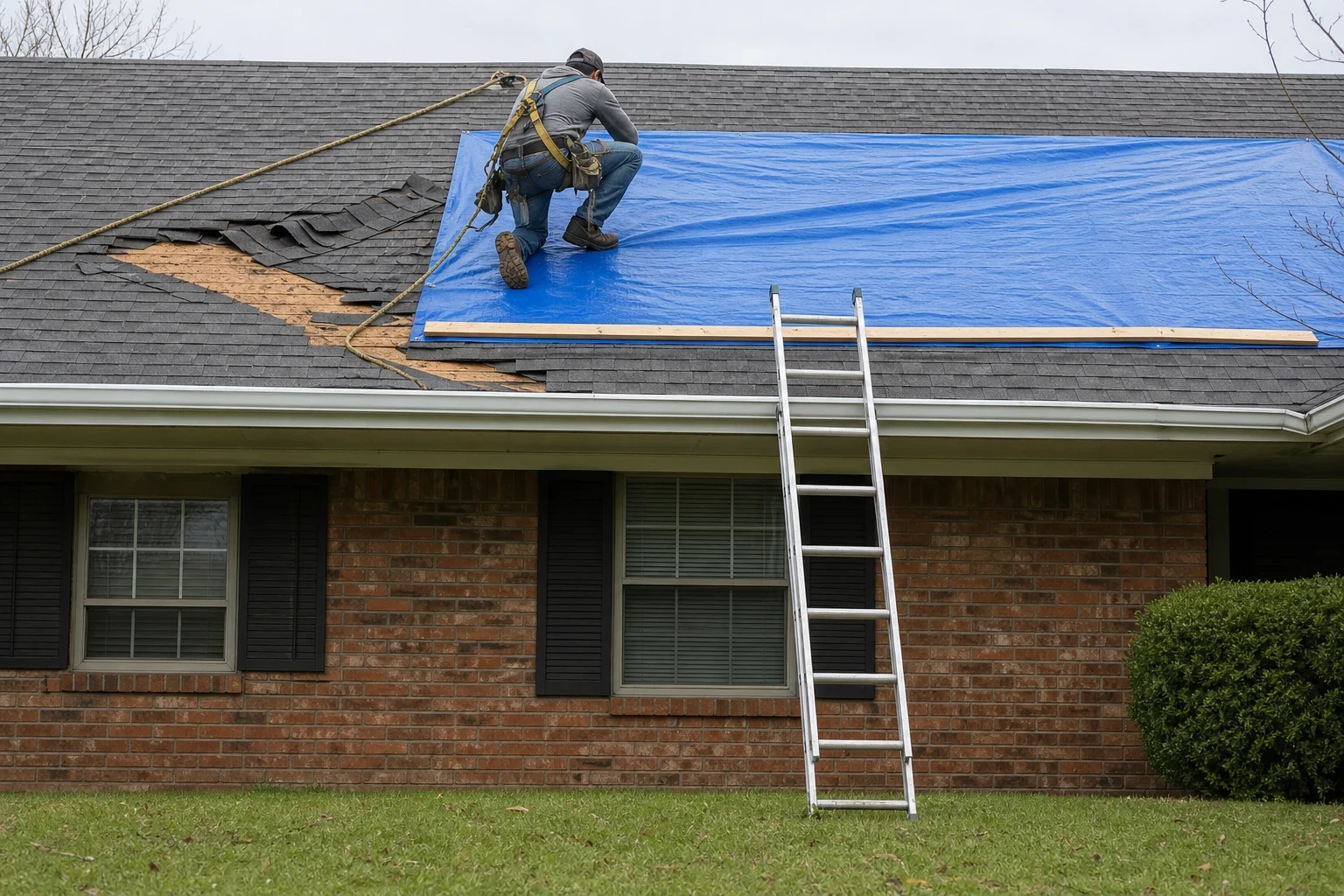
After hail or high wind, we check your roof slope by slope, document what the storm actually did, and repair it with matched materials. One person handles your questions, the photos for your claim, the crew schedule and the cleanup, so you never relay messages between strangers.
What storm damage repair covers
Storm damage is rarely one big hole. Hail fractures the fiberglass mat inside an asphalt shingle and knocks loose the granules that shield the asphalt from UV, so a bruised shingle can look fine from the yard and still start leaking a season later. Wind does something different: it breaks the adhesive seal strip under each tab, and once a tab can flex, it creases at the nail line and eventually tears off.
Storm damage repair means finding both kinds of damage, separating it from normal aging, and fixing it properly. That can mean replacing a handful of shingles, rebuilding a section of underlayment and flashing, or, when the damage covers most of the roof, moving to a full roof replacement. We tell you which it is and show you why.
The person who looks at your roof is the same person you talk to when the adjuster visits, when the crew is scheduled and when the job wraps up. You get one name and one number for the whole repair.
What the work includes
- 01
Slope-by-slope damage check
We walk every slope and mark hail hits, creased tabs, lifted seal strips and missing shingles. We also check the soft metals, such as vent caps, drip edge and gutters, because dents there help show the size and direction of the hail.
- 02
Photo documentation
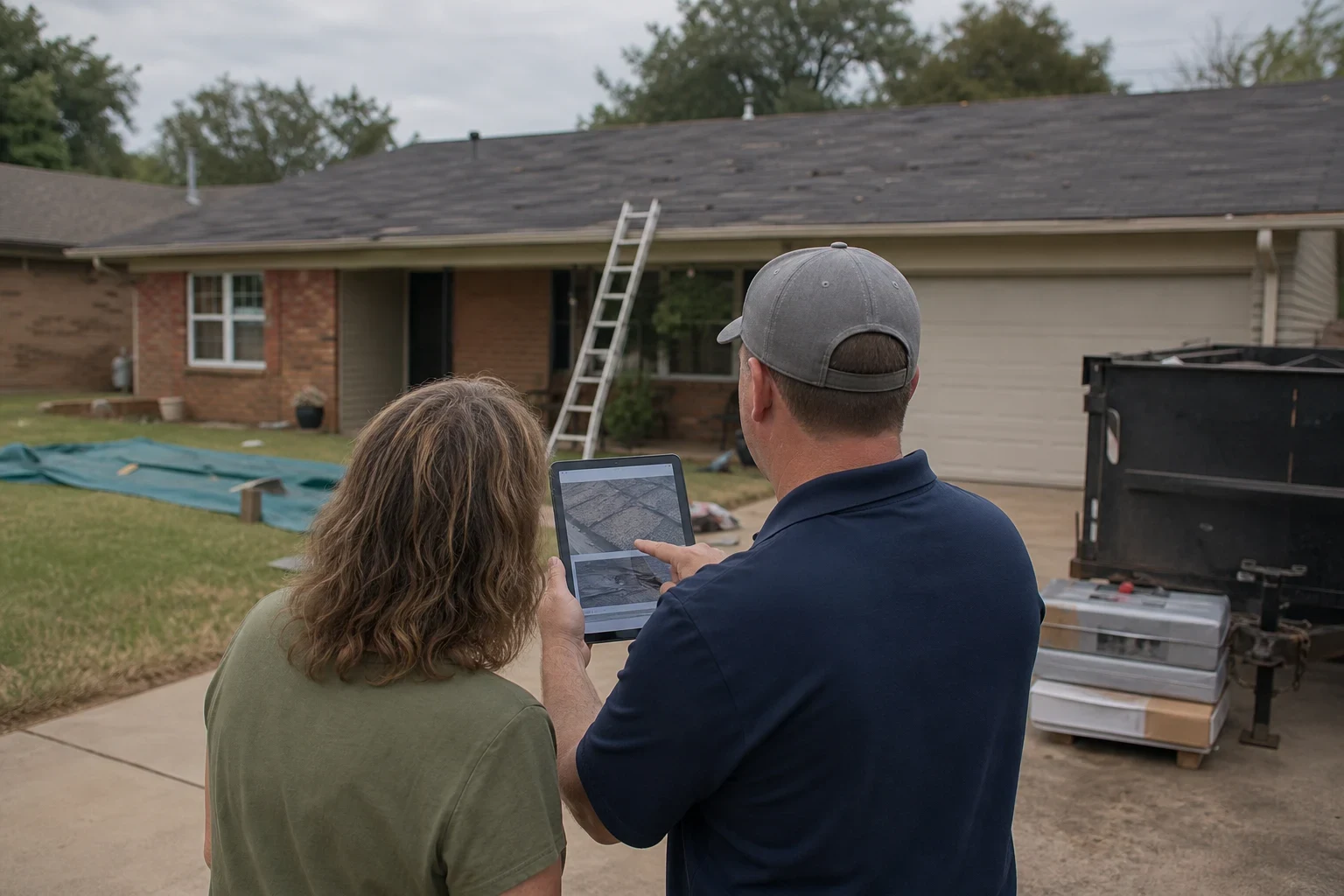
You get dated photos of each damaged area with close-ups and wide shots that show where on the roof they sit. These are useful for your own records and for the conversation with your insurance company.
- 03
Matched shingle replacement
We replace damaged shingles with the closest available match in profile and color, lift neighboring courses carefully, and hand-seal any tabs we disturb so the new section locks down like the rest.
- 04
Flashing, boots and vents
Storms crack plastic vent caps, split rubber pipe boots and bend step flashing away from the wall. We replace those parts instead of caulking over them, since sealant alone tends to fail within a few seasons.
- 05
Decking and underlayment repair
Where water has already gotten in, we pull back the shingles, replace soft or delaminated decking and lay new underlayment before closing the roof back up.
- 06
Cleanup and nail sweep
We collect torn shingles and debris and run a magnetic sweep over the yard, driveway and beds so loose roofing nails do not end up in tires or bare feet.
Questions about Storm Damage Repair?
Call(405) 730-0918Signs your roof took storm damage
Granules in the gutters or at downspouts
A heavy pile of sand-like granules after a storm usually means hail stripped the shingle surface. The exposed asphalt underneath ages fast in summer sun.
Dented gutters, vents or a dinged AC unit
If hail left marks on metal around your home, it hit the roof just as hard. Soft metal dents are often easier to spot from the ground than shingle bruises.
Shingles in the yard or tabs folded back
Missing pieces or tabs that look lifted or creased mean the seal strips let go. The shingles nearby are often loosened too, even if they stayed put.
New ceiling stains or a damp attic
Water spots after a storm point to a breach in the shingles, flashing or a pipe boot. Check the attic decking near vents and chimneys with a flashlight.
Limbs on the roof
A fallen branch can crack decking and puncture underlayment under shingles that look intact. Those spots need a close look from the roof itself.
How a storm repair runs, start to finish
- 1
Your call and a scheduled look
You tell us what you saw and when the storm hit. We set a time to inspect the roof and, if there is an active leak, talk about a temporary dry-in to protect the inside of your home until repairs begin.
- 2
Inspection and photo report
We inspect each slope, the flashing and the attic, then walk you through the photos. You hear plainly whether this is a repair, a partial rebuild or a replacement, and what we based that on.
- 3
Insurance coordination
When you open a claim, your contact can be there for the adjuster's visit and point out each spot we photographed. Coverage is your insurer's call. Our part is making sure nothing gets missed and the measurements are right.
- 4
Repair day
The crew protects landscaping and siding, removes damaged material, checks the decking, and installs new underlayment, flashing and shingles. Your contact stays reachable through the day for questions.
- 5
Closing inspection with you
A magnet pass picks up stray nails across the yard and driveway, and torn shingles leave with the crew. Then your contact goes over the finished areas with you and hands over photos of each repair for your records.
What affects the cost of storm repair
No two storm repairs price out the same, because hail and wind leave very different damage patterns from one roof to the next. Your estimate comes in writing with every material and labor item broken out on its own line, which makes it easy to compare against the scope your insurer sends. If we find hidden damage once shingles come off, we show you before any added work goes ahead.
- How much of the roof is damaged
- A few wind-torn tabs on one slope is a small job. Hail bruising spread across every slope can make a full replacement more sensible than patching.
- Shingle availability and match
- Older or discontinued shingles can be hard to match. When the closest match still stands out, you may decide on a larger section to keep the roof uniform.
- Condition under the shingles
- Wet or rotted decking, failed underlayment and rusted flashing all add material and labor that only show up once the old shingles are removed.
- Roof pitch and access
- Steep slopes, multiple stories and tight side yards need more safety setup and slow the work down.
Storm damage repair questions
Should I call you or my insurance company first?
Either order works, but many homeowners like to know what is actually up there before filing. We inspect, photograph the damage and tell you honestly whether it looks like storm damage or ordinary wear. That helps you decide whether a claim makes sense.
Can hail damage a roof without causing a leak right away?
Yes, and it often does. A hail strike can crack the shingle mat and knock off granules without breaking through. The leak shows up months later, after sun and freeze-thaw cycles have worked on the weak spot.
How do you tell storm damage from normal aging?
Hail leaves scattered, roughly circular impact marks that feel soft under a thumb, and they usually line up with dents on nearby vents or gutters. Age looks different: the granules thin out evenly, and tabs curl or split on every slope, not in random spots. We mark both kinds on the photos so you can compare them side by side.
Will my repaired section match the rest of the roof?
We source the closest match in shingle style and color. A new section can look slightly brighter at first while the existing roof is weathered, and that difference usually fades over time. If a good match is not possible, we explain your options before work starts.
Do you handle gutter damage from the same storm?
Yes. Dented or pulled-away gutters are common after hail and wind, and we can include them in the same job through our gutters service so your one contact covers both.
Had a storm come through?
Tell us what you noticed and when. The person who answers will be the one who inspects your roof, explains the photos and keeps the repair on track until the yard is clean.