ServicesGutters
Gutter Installation and Repair in Del City
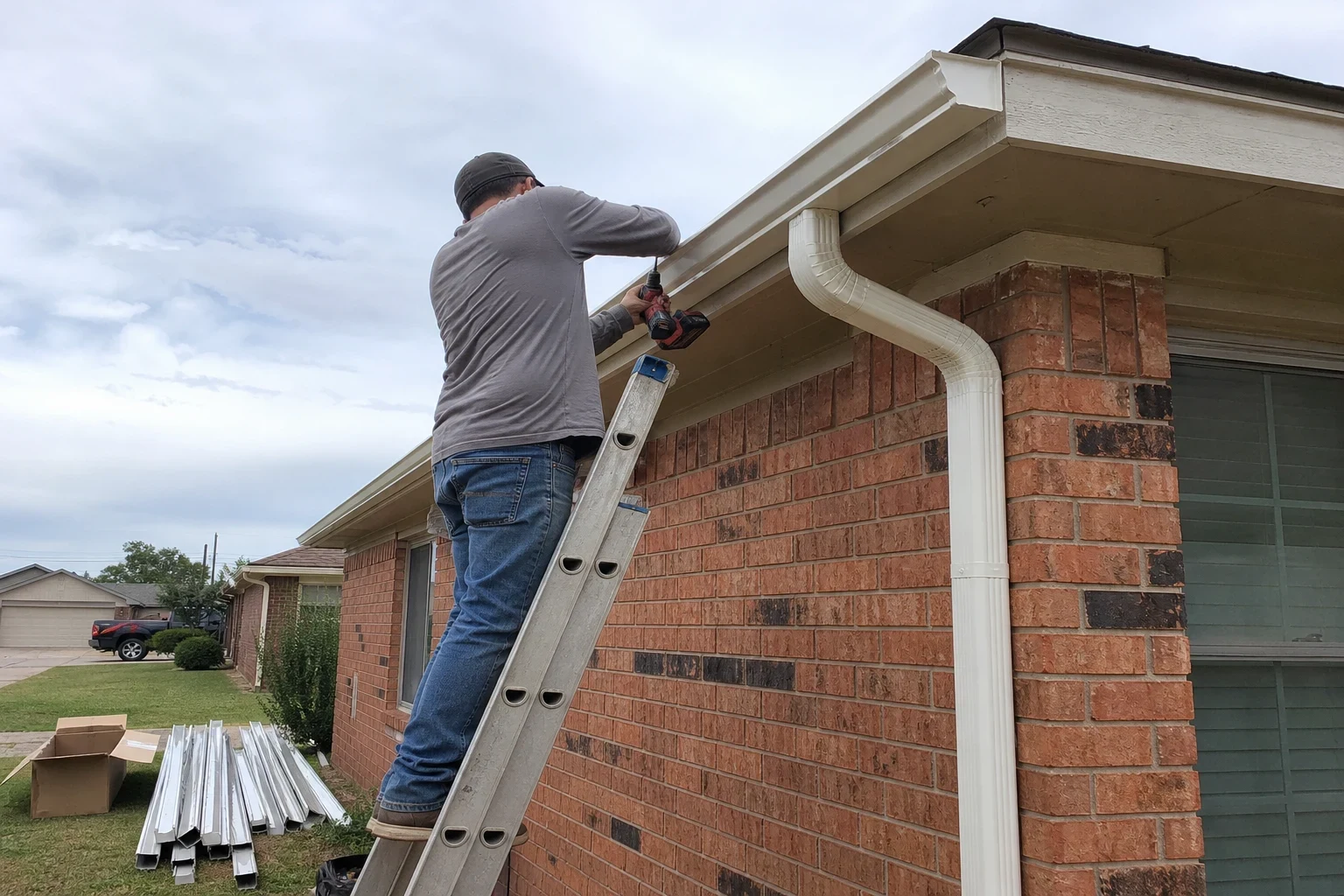
We install and repair one-piece aluminum gutters sized to your roof, sloped toward each outlet and fastened into solid fascia. One person handles your questions, the measurements and the schedule, so you always know who to ask about your home's drainage.
What a Gutter System Actually Does for Your Roof
Gutters collect the water that runs off your shingles and carry it to downspouts that discharge it away from the house. When that path breaks down, water spills over the front edge, soaks the fascia board, rots the roof deck along the eave and pools against the foundation. The clay common under Oklahoma lots takes on water and expands, then pulls back during dry spells, so repeated overflow at one corner can surface months later as cracked brick or a door that starts to stick.
Most of the problems we see come from a few causes: gutters that are too small for the roof area feeding them, sections pitched flat or backward, hangers that have pulled out of soft wood, and too few downspouts. We look at all of it, then tell you whether a repair will hold or whether new gutters make more sense.
The person who measures your home is the same person you call with questions and the one who checks the finished work with you. You do not get handed from a salesperson to a crew lead to an office.
What You Get With Our Gutter Service
- Runs made from a single length
- Our crew rolls each gutter out of aluminum coil right at your home, cut to span the full distance between corners. With no splices along the straight runs, there are far fewer seams that can start to drip.
- Sizing matched to roof area
- We weigh a 5-inch K-style profile against a 6-inch one based on how much roof surface, and how steep a pitch, drains into each run. Large or steep planes frequently call for the wider trough so a heavy spring storm does not shoot water past the edge.
- Downspouts that carry their share
- Outlets are 2x3 or 3x4 inches and spaced so no single downspout is overloaded. Extensions or splash blocks carry the discharge out from the foundation.
- Screw-in hidden hangers
- We fasten hangers with screws through the trough into the fascia, spaced tightly, rather than using spike-and-ferrule nails that back out over time. Any soft fascia gets shown to you and replaced before a gutter goes on it.
- Roof-edge flashing check
- When water runs down behind a gutter, the flashing at the eave is usually the cause. We make sure the drip edge or gutter apron extends into the trough so runoff drops where it belongs.
- Fixes for gutters worth keeping
- If your system is still sound, we reseal miters and end caps, re-pitch low spots, swap out bent sections and clear blocked downspouts.
How to Tell Your Gutters Are Failing
Rain spilling past the lip
Water pouring over the outer edge in a storm points to a gutter that is clogged, too small or sloped the wrong way. Stand outside during a steady rain and you can usually spot the section that gives out first.
Drooping runs or gaps at the fascia
A section that bows between hangers collects standing water. That added weight loosens more fasteners as the months go by.
Stains or peeling paint on the fascia
Dark streaks below the gutter mean water is getting behind it and running down the board. Left alone, the fascia rots first and the decking along the eave follows.
Leaking miters and end caps
Sealant at corners and caps hardens and splits through hot summers. If the aluminum itself is in good shape, a drip at a joint is often fixed with a fresh seal.
Erosion along the drip line
A bare strip or small trench in the soil or mulch below the eave marks the exact spot where water is spilling over instead of reaching a downspout.
Dings left by hail
Hail can crush the gutter profile and crack the seals at joints. When a storm has marked your shingles, have the gutters looked at during the same visit.
What Sets the Cost of a Gutter Job
Most of a gutter price comes down to how much metal goes on your home and how much repair the roof edge needs before anything is hung. Your quote breaks each part out on its own line so you can trace where the money goes. We leave figures off this page because no two rooflines measure the same.
Linear feet of gutter
More footage and more inside or outside corners mean more coil stock, more miters to cut and seal, and more hours on the ladder.
Trough and outlet size
A 6-inch K-style trough paired with 3x4 downspouts takes more aluminum than a 5-inch trough with 2x3 outlets. On a big or steep roof plane, that added capacity is often what keeps the system from overflowing.
Soft or decayed fascia
Gutter hangers need solid wood to bite into, so any rotted boards along the eave come out and get replaced first. We photograph those sections so you can see why the line item is there.
Eave height and site access
Second-story eaves, sloped yards and narrow side passages mean more ladder moves and slower work.
Downspouts, elbows and extensions
Every extra outlet adds parts and labor. Spreading the water across more outlets usually pays off in better drainage.
How a Gutter Job Runs
- 1
Measure and look closely
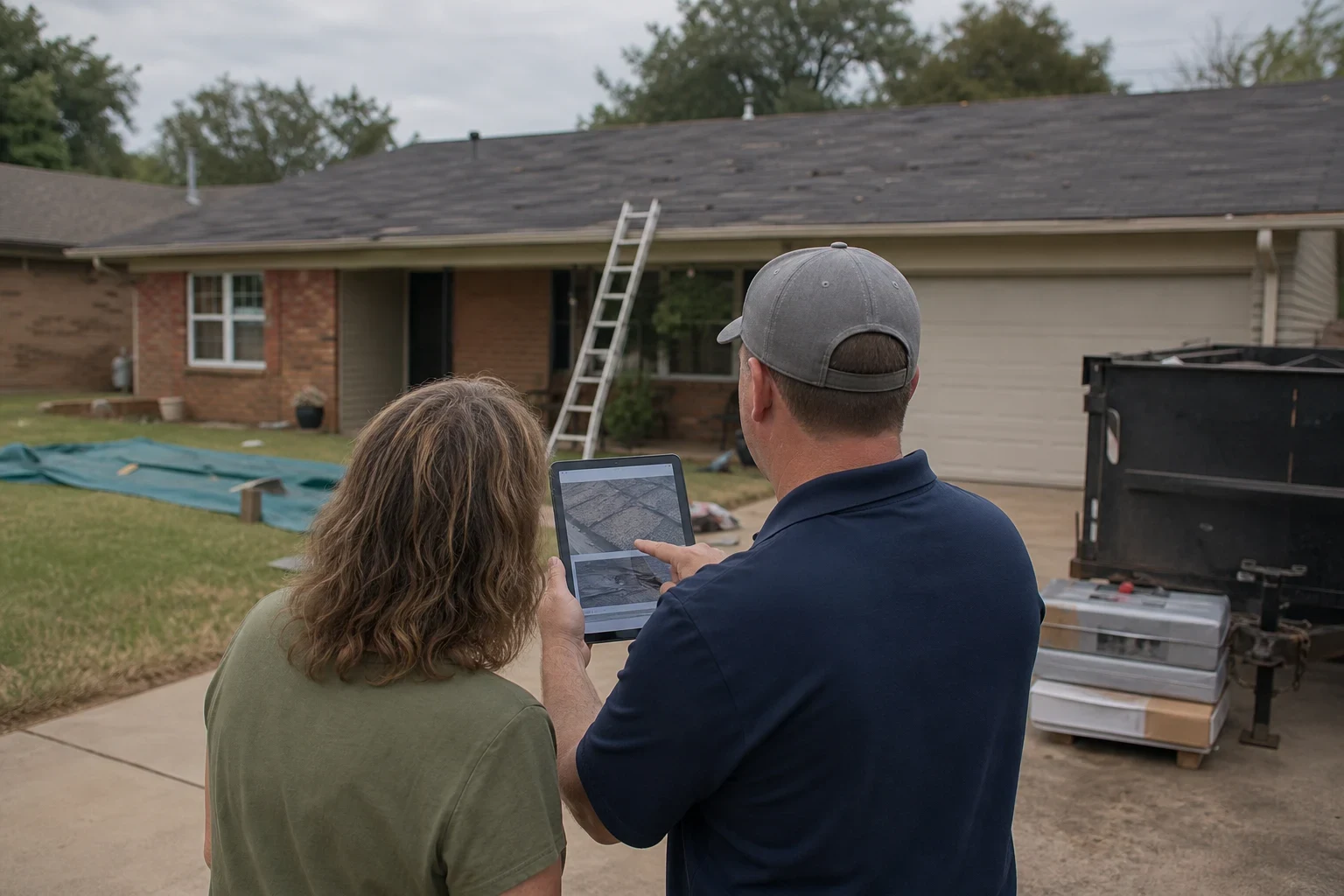
We walk the roofline, measure each run, check the fascia for soft spots and note where downspouts drain now. You get photos of anything that needs repair.
- 2
Explain the plan and the quote
Your contact walks you through gutter size, downspout locations and any fascia work, with each item listed separately. You decide on repair or replacement with the reasons in front of you.
- 3
Remove and prepare
On install day we take down the old gutters, set aside anything salvageable you want to keep and replace damaged fascia boards.
- 4
Form, hang and pitch
We roll out each one-piece section on site and hang it so it falls gently toward the downspout, dropping roughly 1/4 inch over every 10-foot stretch. Then we seal the corners and attach downspouts and extensions.
- 5
Test and clean up
We run water through the system to confirm it drains, pick up fasteners and scrap from the yard, and go over the finished work with you.
Common Gutter Questions
How do I know if my gutters can be repaired instead of replaced?
When the metal is straight and the trouble is limited to dried-out seals or a handful of loose hangers, a repair tends to last. When sections have rusted through, carry deep dents, are undersized for the roof, or keep leaking at joint after joint, new gutters are the smarter spend. Either way, we explain what we found and why we lean one direction.
What is the advantage of one-piece gutters over sectional ones?
Sectional systems are pieced together roughly every ten feet, and each of those splices relies on sealant that eventually dries and separates. A one-piece run only has joints at the corners and where it drops into a downspout. Fewer joints leaves water far fewer places to get through.
Will my home need 5-inch or 6-inch gutters?
The answer comes from how much roof surface feeds each gutter and how steep that surface is. A large or steeply pitched plane sheds rain quickly enough to shoot past a 5-inch trough during a hard storm. We measure each section of your roof before recommending a size.
Can new gutters go on during a roof replacement?
Yes, and it is often the cleanest way to do it. With the old roof off, we can install the drip edge and gutter apron properly and replace any bad fascia in one pass. The same contact schedules both jobs, and our roof replacement page covers the roofing side.
Are hail-dented gutters covered on a storm claim?
They are often included when hail has also damaged the roof. We photograph the dents and failed seals so you can pass that record to your insurer, but the adjuster decides what is covered. The storm damage repair page walks through how we handle that part.
Get Your Gutters Draining Right
Tell us what you are seeing during rain, and we will set a time to measure your roofline. You will deal with one person from the first call to the final walk-around.