ServicesCommercial Roof Replacement
Commercial Roof Replacement in Del City
When a low-slope roof keeps leaking after patch upon patch, we tear it off or recover it with a new membrane system, fix the drainage and reflash every curb and wall. One person handles your questions from the first core cut to the final walk.
When a new roof makes more sense than another repair
Commercial roofs rarely fail all at once. Seams open on a TPO or EPDM membrane, base flashing pulls away from a parapet, and water finds the insulation board below. Once that polyiso is saturated it stops insulating, adds weight to the deck and keeps feeding leaks long after the surface is patched. At that point repairs only move the drip around.
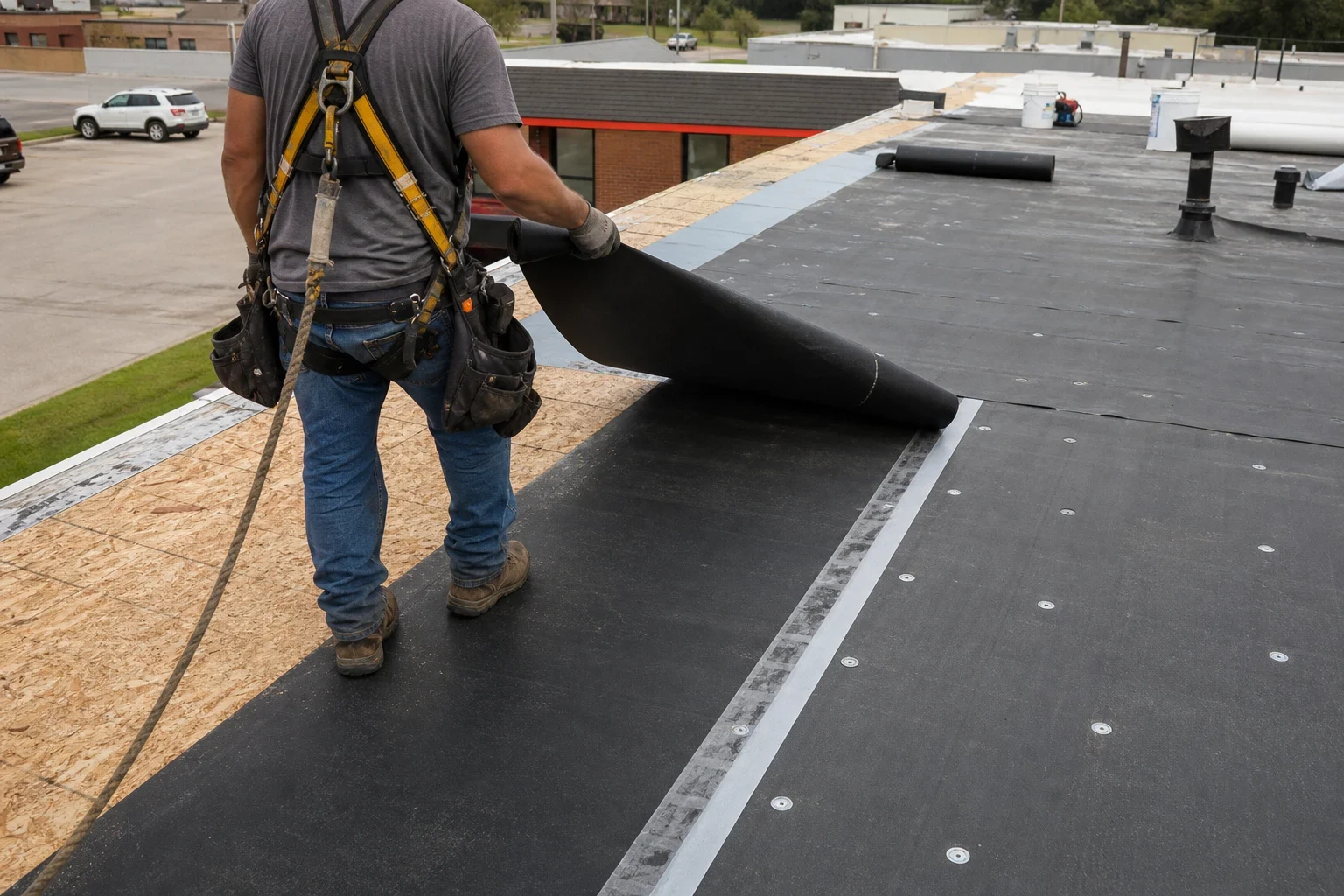
Replacement means we remove the failed layers where needed, correct the slope so water reaches the drains and install a new membrane with new flashing at every penetration. If your roof still has dry insulation and only one existing layer, a recover can be the better value, and we will tell you which one fits. If a targeted fix is enough, our commercial roof repair page covers that work.
You deal with one contact the whole way. That person walks the roof with you, writes the estimate, coordinates the crew and material deliveries, and answers your calls until the site is clean.
What the replacement includes
- Moisture survey and core cuts
- We cut small cores through the roof to see how many layers are there and whether the insulation is wet. That answer decides between a full tear-off and a recover.
- Tear-off and deck check
- Wet insulation and failed membrane come off down to the deck. We check the steel or wood deck for rust, rot and loose fasteners and replace damaged sections before anything new goes down.
- Tapered insulation for drainage
- Ponding water shortens a membrane's life and stresses the deck. Tapered polyiso and crickets behind curbs push water toward drains and scuppers instead of letting it sit.
- New membrane system
- We install TPO, EPDM or modified bitumen based on your building, its use and its budget. Seams are heat-welded or adhered per the system, then probed and checked.
- Flashing, curbs and edge metal
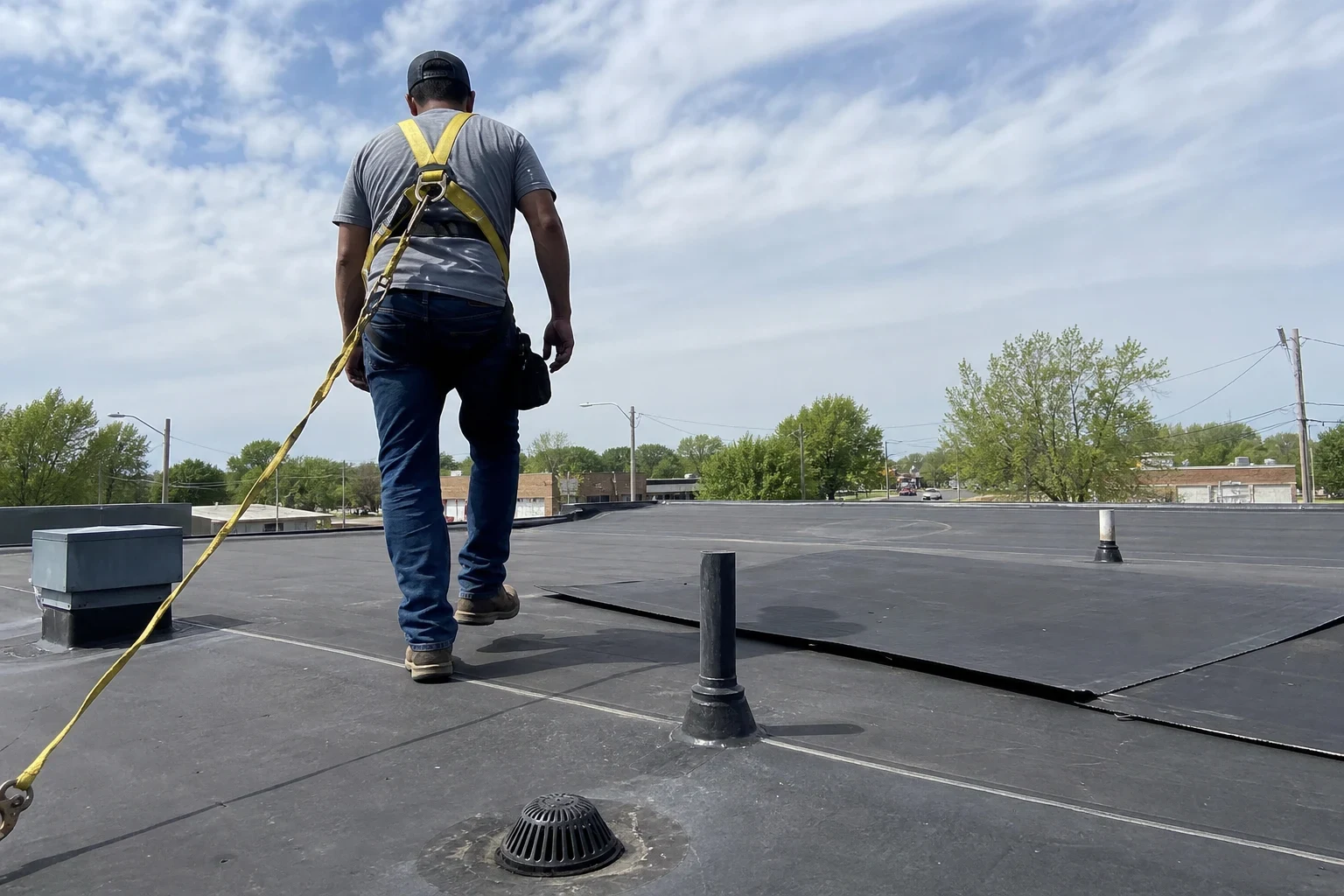
- Parapet walls, HVAC curbs, pipe boots, drains and perimeter edge metal all get new flashing. Most commercial leaks start at these details, not in the open field of the roof.
- Permit and cleanup
- We pull the permit, keep debris contained in dumpsters and magnet-sweep the lot and drive lanes for fasteners when the job wraps up.
Signs your commercial roof is due
Water standing two days after rain
Ponding that lingers points to sagging insulation or poor slope. It speeds membrane breakdown and adds load the deck was not built for.
Leaks that return after repairs
If the same ceiling tiles stain again after a patch, water is likely traveling through wet insulation from somewhere else on the roof.
Shrinking or blistered membrane
EPDM that has pulled tight at the edges and modified bitumen with blisters or alligatored surfacing have reached the end of their service life.
Open seams and loose flashing
Hail and strong Oklahoma wind work at seams and base flashing. Once several seams are open, a full system often costs less over time than chasing each one.
Soft spots underfoot
A spongy feel when walking the roof usually means crushed or saturated insulation, and sometimes deck damage below it.
What moves the price
Commercial roofs are priced by the square foot, but the condition of what is underneath matters as much as size. Core cuts tell us that before we write a number. Your estimate lists each of these items so nothing shows up later as a surprise.
Tear-off versus recover
Removing multiple layers and wet insulation adds labor and disposal. A recover over a dry, single-layer roof costs less when it is allowed.
Membrane and insulation
TPO, EPDM and modified bitumen differ in material and labor. Thicker insulation or tapered systems for drainage add cost but cut energy and ponding problems.
Penetrations and details
Every rooftop unit, vent, drain and parapet needs its own flashing. A roof crowded with equipment takes more hours than an open one.
Deck condition and access
Rusted steel or rotted wood deck has to be replaced. Building height, lift or crane needs and limited staging space also affect the total.
How the job runs
- 1
Roof walk and cores
Your contact meets you at the building and looks over the field, perimeter edges and every penetration. We pull cores and take photos, so you see what sits under the membrane before any decision is made.
- 2
Written scope and estimate
The line-item estimate states tear-off or recover, the membrane system, insulation thickness and the flashing work. It also explains how we will price any deck repairs if we uncover damaged sections.
- 3
Scheduling around your business
Together we set crane or lift access, dumpster placement and the hours for loud tear-off, so tenants, customers and deliveries can keep moving. Each day we open only the area we can seal again before dark.
- 4
Install and inspection
Insulation, membrane and flashing go down in order. Your contact probes seams and checks details during the install and meets the inspector for any permit inspection.
- 5
Closeout on the roof
Before the crew leaves, your contact goes over the completed membrane and flashing alongside you and hands over the job photos. Dumpsters are hauled off and the lot and drive lanes are cleared of debris and fasteners.
Commercial roof replacement questions
Can my business stay open during the replacement?
In most cases, yes. We schedule loud tear-off work and material lifts around your hours and keep entrances clear. The roof is closed up at the end of each day, so the space below stays dry.
Which membrane is right for my building?
It depends on the roof's slope, foot traffic, rooftop equipment and how long you plan to own the building. TPO reflects heat and has welded seams, EPDM handles temperature swings well, and modified bitumen holds up to traffic. We explain the tradeoffs in plain terms on the roof walk.
Do you have to tear everything off?
Not always. If cores show one existing layer and dry insulation, a recover is often allowed and saves money. If there are already two layers or the insulation is wet, a tear-off is the right call.
Who do I talk to while the work is happening?
The same person who wrote your estimate. They coordinate the crew, deliveries and inspection, and they are the one who picks up when you have a question.
Will storm damage affect how the job is handled?
If hail or wind caused the damage, we document it with photos and measurements and explain how the insurance process works. Our storm damage repair page has more on that side of things.
Get a straight answer on your roof
Tell us about the building, the leaks and what you have tried so far. We will set up a roof walk and core cuts so you know whether you need a recover, a tear-off or a repair.