ServicesRoof Repair
Roof Repair in Del City
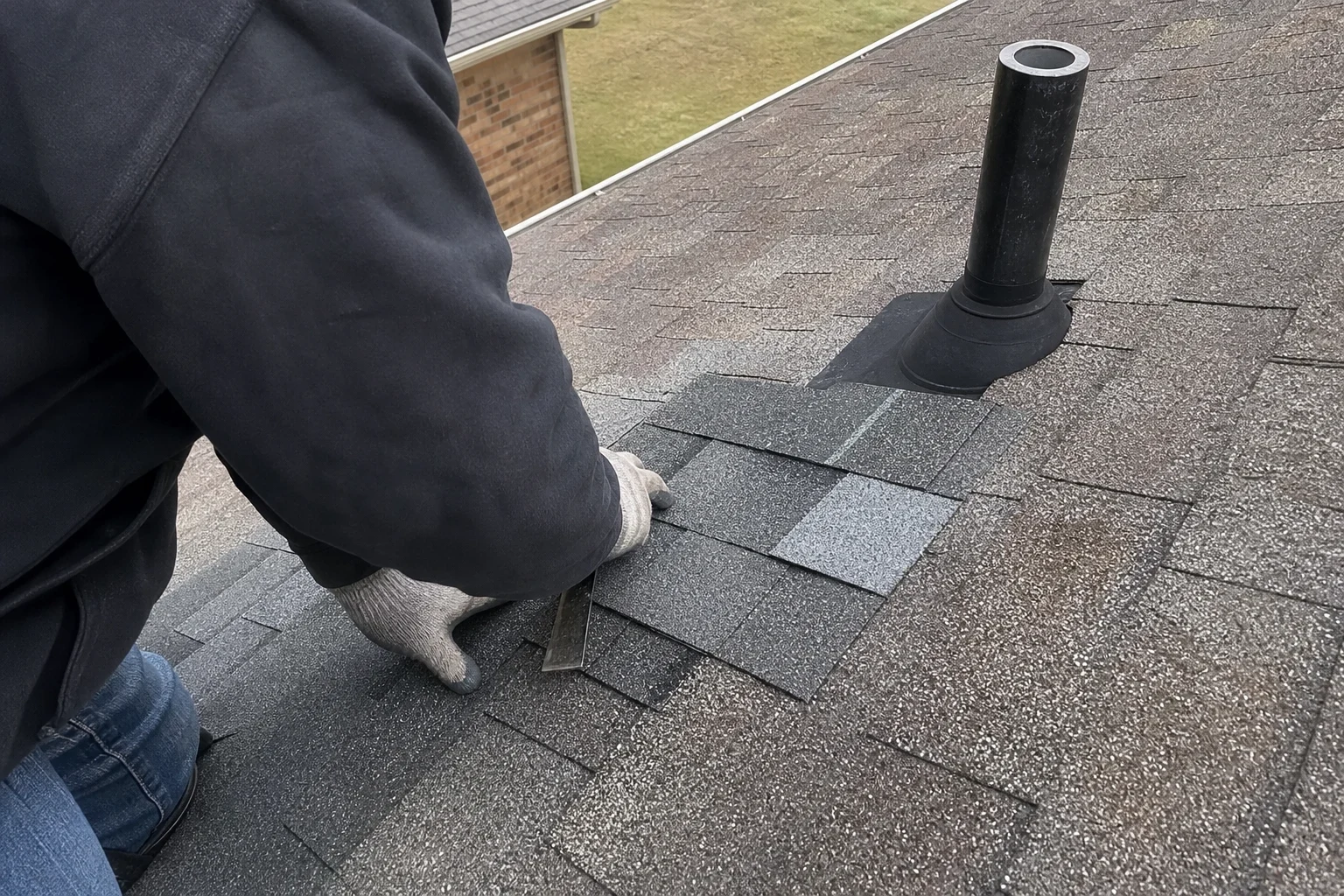
We find where water is actually getting in, which is often several feet from the stain on your ceiling. Then we fix that part: lifted shingles, cracked pipe boots, failed flashing or dried-out sealant. The person who looks at your roof explains the repair and checks the finished work.
A repair that fixes the cause
Few leaks begin in an open stretch of shingles. Most start at a joint in the roof: a chimney or sidewall, a plumbing vent, or a valley that funnels runoff from two slopes. Once water gets past the shingles, it can run along the decking and down a rafter before it soaks the drywall, so a stain in your hallway may trace back to a pipe boot several feet higher. A patch placed right over the stain tends to bring a second visit with the next storm.
A repair fits when the shingles around the trouble spot are sound. They should still hold their granules, sit flat and stay limited to one area of damage. If we see wear spread across the slopes, soft decking in several places or shingles that crack when lifted, we will say so directly and explain what a roof replacement would involve. The choice stays with you.
One person runs your repair from the first call to the final cleanup. That same person goes up on the roof, shoots the photos, writes the estimate and picks up when you call with a question.
What our roof repair work covers
- Tracing the leak
- Before anyone climbs a ladder, we go into the attic with a light and look for water-darkened sheathing, streaked framing and pinholes of daylight. Then we line those clues up with the roof surface to find where water actually gets in, which is often upslope from the drip.
- Shingle replacement
- We pull out shingles that are creased, cracked or torn and set new ones in the nearest color and profile current products offer. Each is nailed through the manufacturer's nailing strip, and the tab is sealed down to the course beneath it so wind has no loose edge to catch.
- Flashing and pipe boots
- The rubber collar on a plumbing vent dries out and splits in strong sun, sending water straight down the pipe. We install new boots, and we refasten or replace step flashing, counterflashing and chimney flashing that has rusted or pulled away from the wall.
- Vents and other penetrations
- Box vents, sections of ridge vent and exhaust caps can crack or lose their seal. We replace damaged units and fasten them so no nail heads are left exposed to rust out and let water follow them in.
- Damaged decking
- Where the plywood or OSB below the leak has turned spongy or started to delaminate, we cut out that section and fit new panels before underlayment and shingles go back on. Laying new shingles over rotted wood only hides the problem.
Warning signs that your roof needs fixing
Stains on ceilings or walls
A tan or brown ring on drywall, especially after a hard or sideways rain, tells you water has already made it through the decking.
Shingles lying in the yard
Strong wind pulls loose any shingle whose sealant bond has aged. With that tab gone, the nails and underlayment underneath take the weather directly.
Wet or darkened attic wood
Shine a flashlight on the underside of the roof after a rain. Dark streaks, damp insulation or rusted nail points mean a leak or a ventilation issue.
Loose or cracked flashing
Openings where the roof meets a chimney or wall, or a bead of caulk standing in for metal, can let water in well before a stain appears inside.
Heavy granules in the gutters
Some loose granules are normal right after new shingles go on. A steady, thick layer from an older roof means the surface is wearing down, most often on the slopes that get the most sun.
How a repair job runs
- 1
Your phone call
Describe what you are seeing and which room it shows up in. The person on the phone is the one who comes to your home, so you only explain it once.
- 2
Inspection and photos
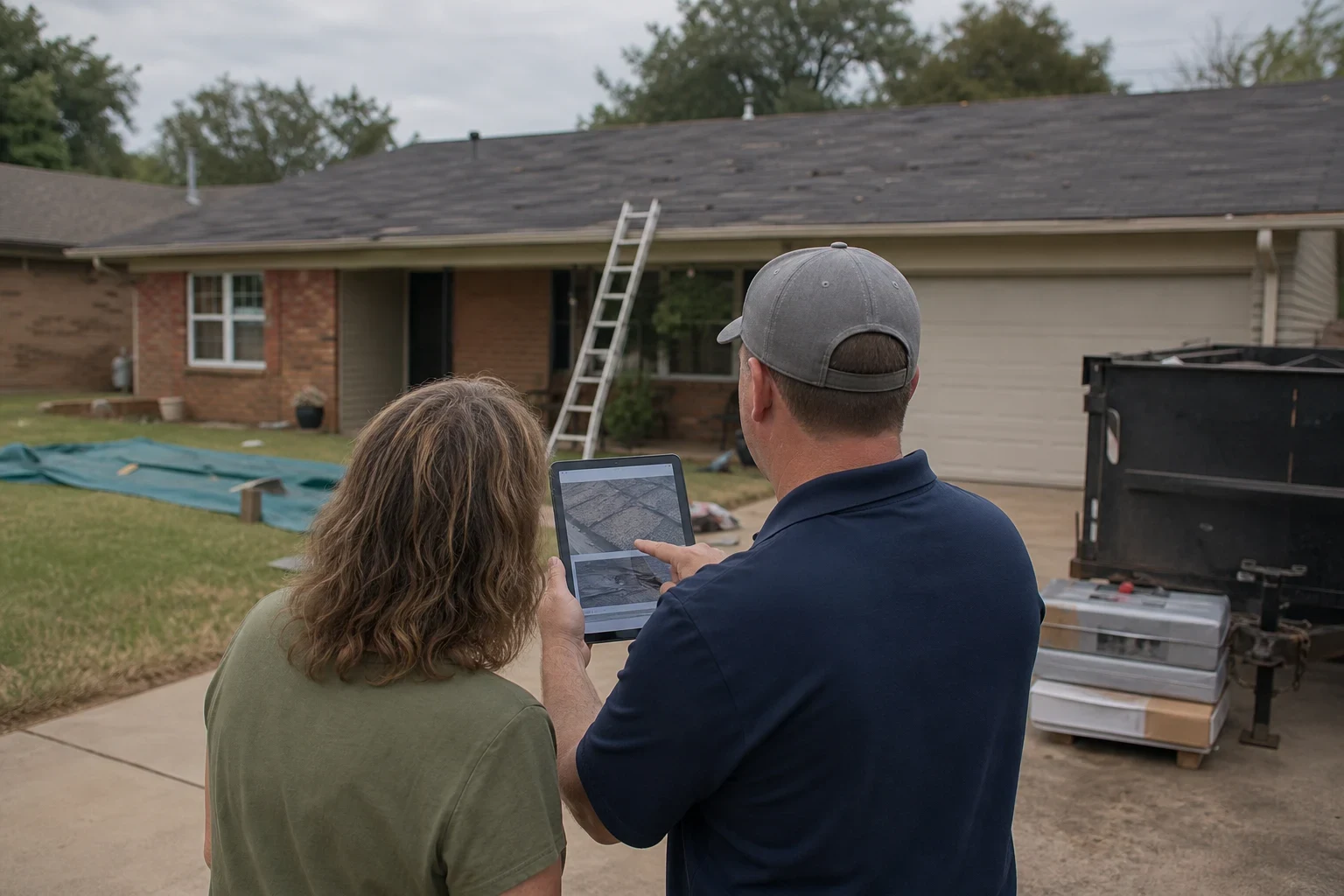
We check the roof surface and the attic and photograph the cause along with any wear nearby. You see the same things we saw.
- 3
Itemized estimate
Your estimate spells out each part of the job, such as how many shingles, which pieces of flashing and how much decking, if any. When a repair is not the sensible choice, we tell you that before any money changes hands.
- 4
Repair and cleanup
We cover plants near the work area, complete the repair and sweep the yard with a magnet to pick up stray nails. Your contact then goes over the finished work with you using after photos.
What moves the cost of a roof repair
A repair is priced on what it takes to stop water where it enters, and the size of the ceiling stain has little to do with it. Two leaks that look the same from inside can need very different work up on the roof. Your estimate breaks out every line, so each part of the price comes with its reason.
- The part that failed
- Replacing a cracked pipe boot is quick and uses few materials. Rebuilding step flashing along a sidewall means lifting the shingle courses around it, setting new metal and relaying each course in order.
- Decking under the damage
- If the sheathing is solid, the job stays small. Plywood or OSB that has gone soft from repeated wetting has to be cut out in full sheets or sections, and the new panels, fasteners and labor appear as their own lines.
- Slope and access
- A steep pitch calls for roof jacks, harness anchors and slower, more careful footing. Two-story walls, tight side yards and flower beds against the foundation also change how we set ladders and protect the ground.
- Finding matching shingles
- Current architectural shingles are easy to get. Discontinued colors, older three-tab styles or specialty products can take extra searching to come close to what is already on your home.
Roof repair questions
Something not covered here? (405) 730-0918
Is a repair enough, or is my roof due for replacement?
Often a repair is all you need. When the shingles beside the damage flex without cracking and still hold their granules, a fix in that area will last. When they snap or show bare mat across the slope, a patch will not hold for long, and we will show you the photos that explain why.
Why is my roof leaking again after it was already patched?
Repeat leaks usually mean the earlier patch went over the stain rather than over the spot where water enters. Split pipe boots and loose flashing are the parts most often missed. We begin in the attic and follow the water path before anyone works on the roof surface.
Will new shingles blend in with the old ones?
We match type, profile and color as closely as today's products allow. New shingles can look a shade off until a season of sun and weather evens them out. If no close match exists, we tell you before the work starts.
Does someone have to be at the house while you work?
Usually not, since the repair happens outside. We do need someone to open the attic for us during the inspection. Once the job is done, your contact calls to go over the finished photos with you.
How do I know if the damage came from a storm or from age?
Hail leaves bruised spots and exposed mat, and wind leaves creased tabs running in a line. Age looks different: even granule loss and curled edges across the slope. We write down which one we find, and if it points to a storm, our storm damage repair page explains how we document damage for an insurance claim.
Get the leak found and fixed
Tell us where the water is showing up. One person will look at your roof, explain the cause and handle the repair from start to cleanup.