ServicesRoof Replacement
Roof Replacement in Del City
Once a roof is past patching, we pull off every old layer, repair the sheathing that turns up and build a new roof system from the deck up. One person handles your questions, scheduling and cleanup, so you are never handed off mid-job.
When a New Roof Beats Another Repair
Shingles are only the top layer. Under them, the decking, underlayment, flashing, drip edge and attic ventilation each do a job, and once several are worn out together, repairs end up chasing one leak after another. At that stage a new roof usually costs less over its life than continued patching.
We give you a plain answer on where your roof falls. If a focused fix from our roof repair service will genuinely add years, we tell you. If the granules are gone, the shingle mat has turned brittle and Oklahoma hail has bruised every slope, replacement is the honest recommendation.
You keep the same contact from the first measurement to the final nail sweep. Nobody shuffles you from a salesperson to an office to a crew lead who each hold one piece of the plan.
What Goes Into a Full Replacement
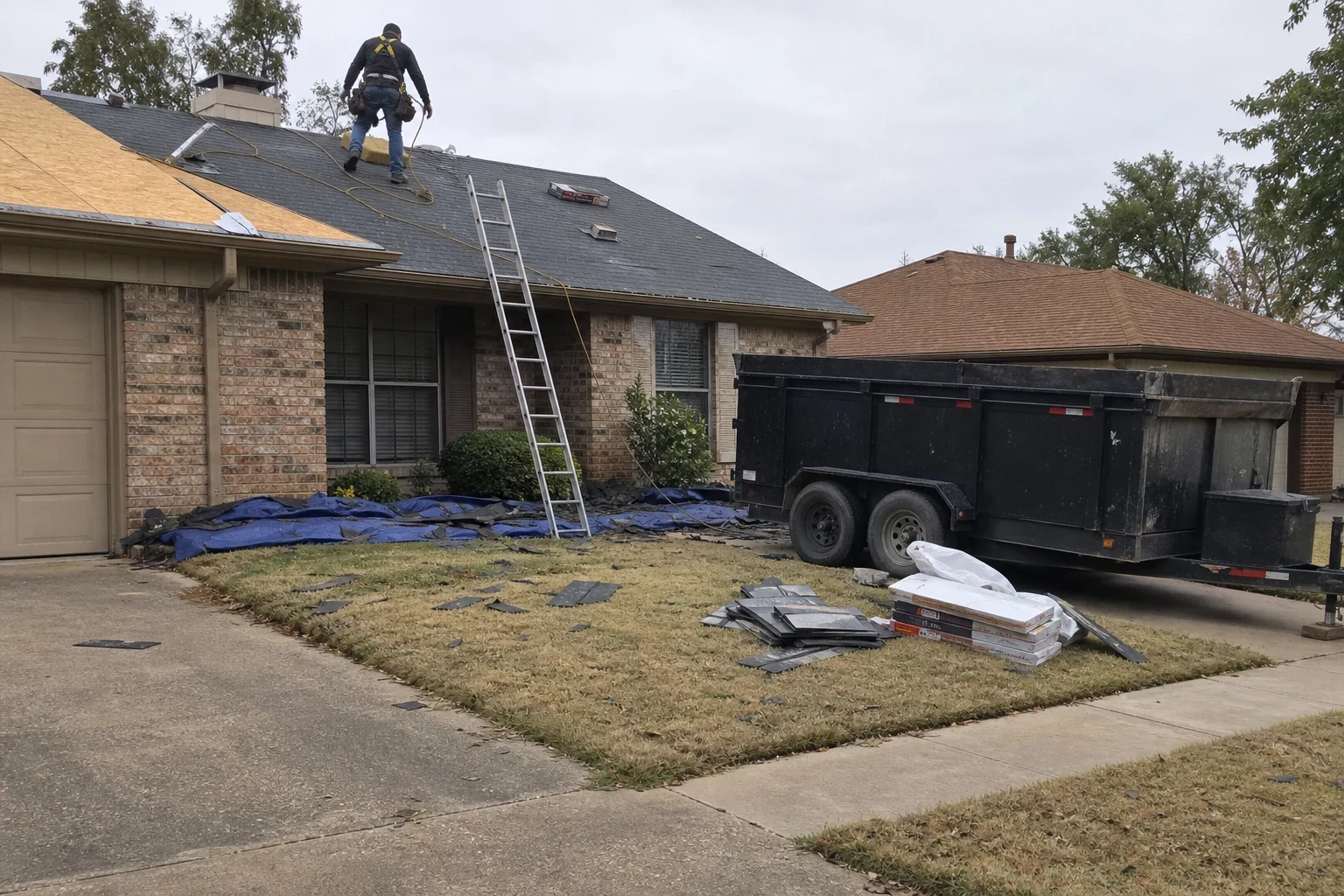
- Strip to bare sheathing
- Every old shingle layer and all the felt come off. Shingling over an existing roof conceals rot, holds heat and loads the framing, so we skip that shortcut.
- Sheathing check and repair
- With the deck exposed, we look over each sheet for soft areas, delamination and water stains. Bad plywood or OSB is cut out and replaced before the new roof is built, and we photograph the damage so you can see it.
- Membrane and underlayment
- Self-adhering ice and water membrane lines the valleys, eaves and the areas around penetrations where water gathers. Synthetic underlayment covers the remaining deck as backup protection beneath the shingles.
- Fresh flashing and drip edge
- We install new step flashing along walls, counterflashing at chimneys, new pipe boots and drip edge on eaves and rakes. Old flashing left in place is a frequent cause of leaks on roofs less than a year old.
- Shingles and balanced ventilation
- Your chosen shingle line goes on, impact-resistant products included, with intake and exhaust vents sized to match. Good airflow keeps summer attic heat from baking shingles from underneath and cuts winter condensation.
- Cleanup and final walk
- Tarps shield plants and siding during tear-off, debris drops straight into a dumpster, and magnetic sweepers pass over the lawn and driveway. Your contact then walks the new roof with you.
Signs Your Roof Needs Replacing
Granules in the gutters
Shingles shed their ceramic granules as they age. Heavy buildup in your gutters or bare black patches on the roof mean the asphalt is exposed to UV and breaking down fast.
Curling, cupping or cracking
Shingle edges that lift or tabs that crack show the mat has dried out. Brittle shingles tear in high wind and no longer seal flat.
Widespread hail bruising
Hail leaves soft dents that crush the mat and knock granules loose. A few spots can be repaired, but bruising across every slope usually calls for a new roof and often an insurance claim.
Sagging rooflines or soft decking
A dip between rafters or a spongy feel underfoot points to rotted decking. That is a structural issue that shingle repairs cannot reach.
Repeated leaks in different places
One leak is a repair. Leaks that keep moving from the chimney to a valley to a vent mean the whole system is failing.
How Your Replacement Unfolds
- 1
Measurements and written estimate
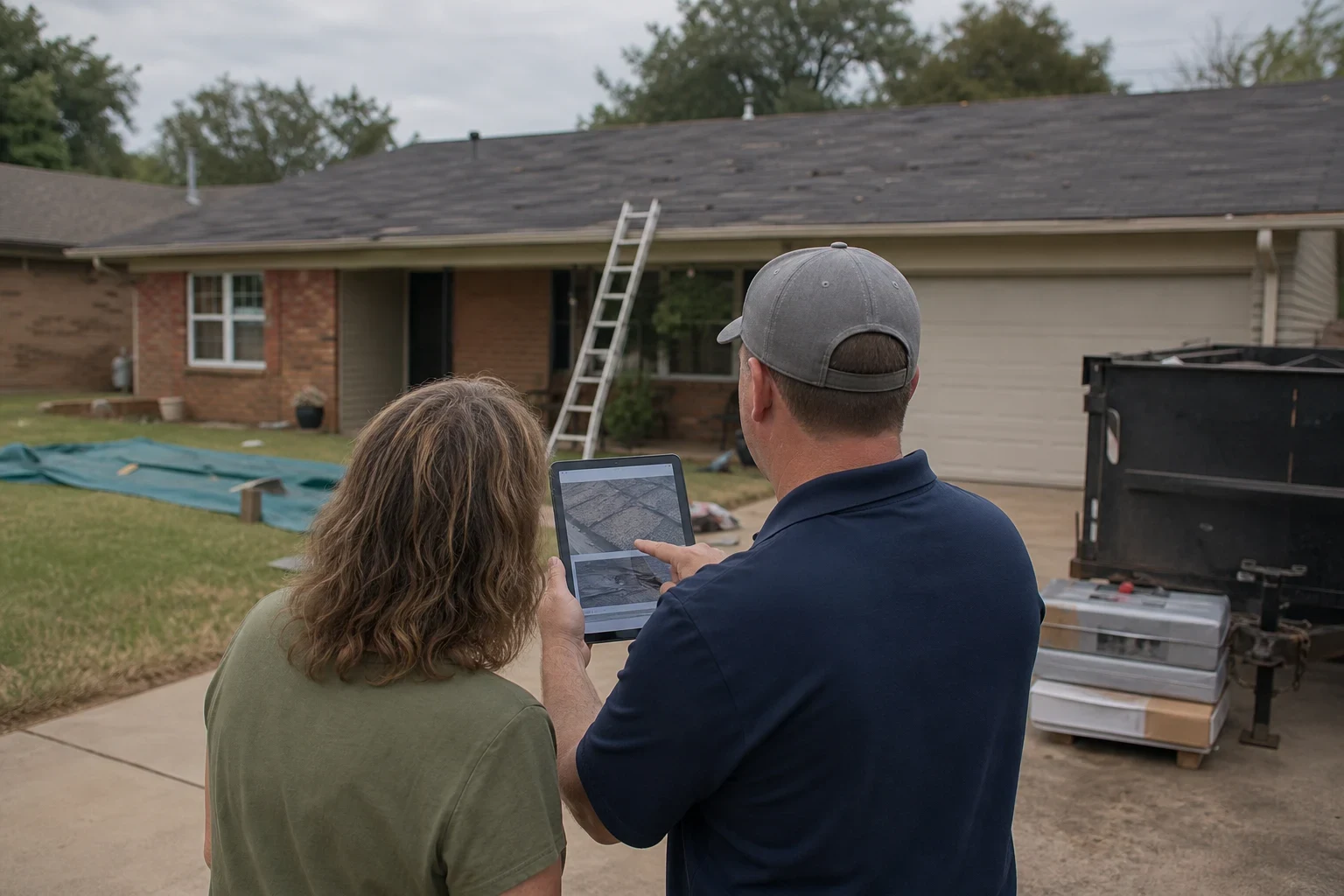
Your contact measures every slope, looks in the attic for stains and airflow problems, and photographs trouble spots. The estimate you receive lists materials, labor, sheathing repair and permit costs as separate lines.
- 2
Product choice and scheduling
We go over shingle styles and colors with you, order the materials and pull a permit if one is needed. You get a start date and a short list of things to move away from the house.
- 3
Tear-off and dry-in
The crew removes the old roof, replaces damaged sheathing and lays underlayment and ice and water membrane before leaving, so your home is never open to the weather overnight.
- 4
Install and inspect
Flashing, vents, shingles and ridge cap follow. Most homes take one to two days depending on size and pitch, and we coordinate any required city inspection.
- 5
Final cleanup and review
Debris is hauled off, the yard and driveway get a magnetic pass for stray nails, and we look over the roof and grounds with you before signing off.
What Sets the Cost of a Replacement
We price your roof from measurements taken on it, not from a guess over the phone, so you will not hear a number until we have been up there. The written estimate breaks out each factor below on its own line. If tear-off exposes bad sheathing, we photograph it and tell you what it adds before any new wood goes down.
- Squares and slope
- Cost tracks the total roof area in squares. A steep pitch slows the crew and calls for extra fall protection and staging.
- Number of old layers
- Two or three stacked layers of shingles take more labor to strip and more dumpster capacity to haul off.
- Sheathing condition
- Soft or delaminated plywood and OSB must be swapped out, and nobody knows the exact amount until the old roof comes off.
- Shingle line
- Architectural and impact-resistant shingles run higher than basic three-tab. Some insurance carriers give a premium discount for impact-rated roofs, so it is worth asking yours.
- Valleys and penetrations
- Every dormer, chimney, skylight and valley needs its own flashing details, which adds material and hours.
Common Roof Replacement Questions
Something not covered here? (405) 730-0918
Can new shingles go right over my existing ones?
We advise against it. An overlay covers up decking problems, puts extra weight on the rafters and holds heat that wears shingles out sooner. Stripping to bare sheathing lets us correct the deck and flashing the right way.
Does homeowners insurance cover roof replacement?
When hail or wind caused the damage, many policies pay for replacement less your deductible. We photograph the damage and can be on the roof when your adjuster inspects it. The coverage decision is your insurer's, not ours. Our storm damage repair page walks through the claim steps.
Do I have to stay home while the crew works?
No. It helps if you are there at the start to confirm color and details, and again at the end to walk the finished roof. In between, your contact calls you with updates.
What if rain shows up mid-project?
We plan around the forecast and only strip as much roof as the crew can cover with underlayment before they leave. If a storm arrives early, exposed sections get underlayment and tarps before anyone climbs down.
Is this a good time to replace my gutters too?
Often, yes. If your gutters have lost their pitch, leak where sections join or have hangers working loose from the fascia board, swapping them now makes sense because the drip edge and fascia are already exposed. Our gutters page covers the options, and we can price both on one estimate.
Know Where Your Roof Stands
We check the shingles, sheathing and attic, then tell you plainly whether replacement is warranted and put the numbers in writing. The person who picks up your first call is the one who sees the job through to the final cleanup.