ServicesRoof Inspections
Roof Inspections in Del City
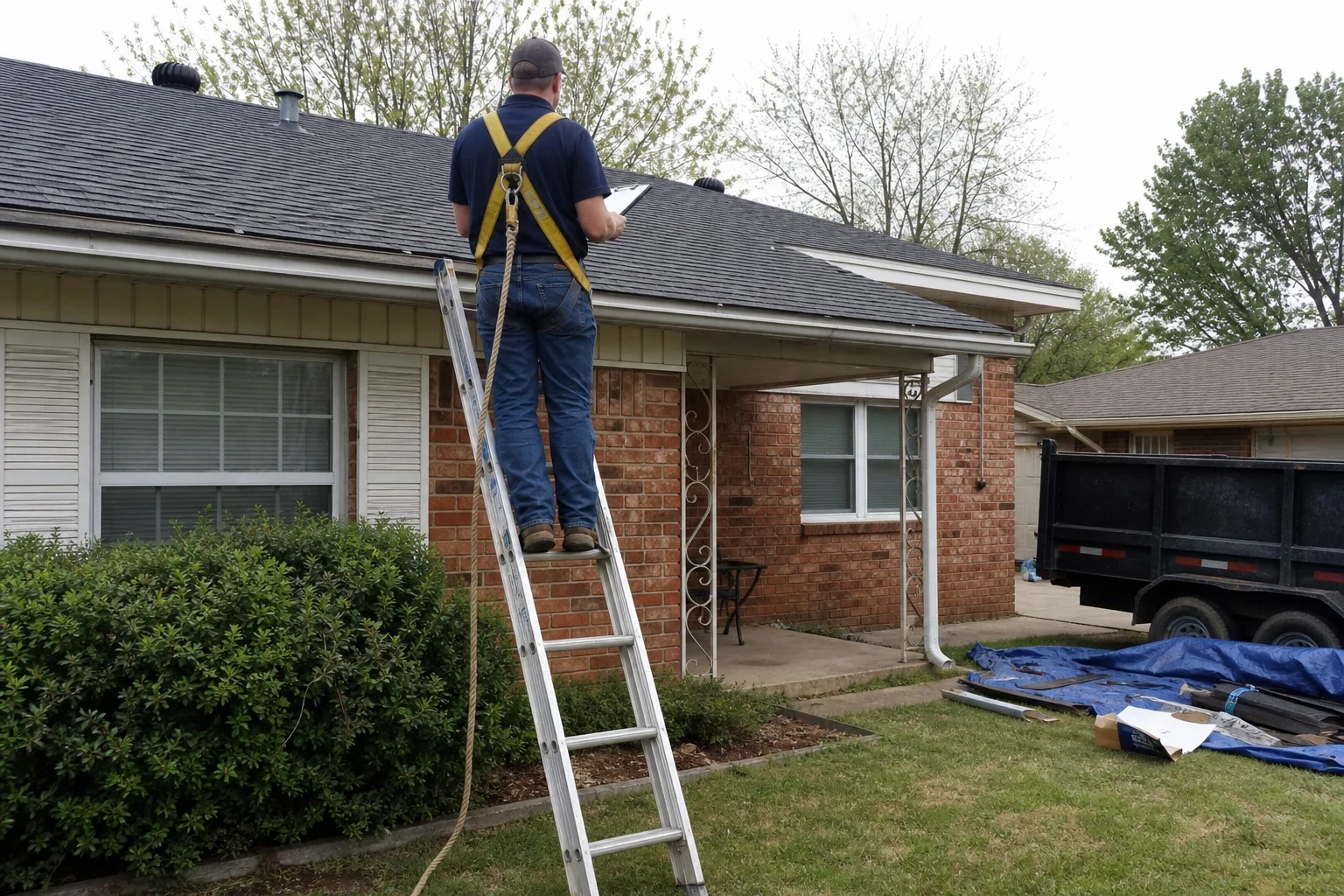
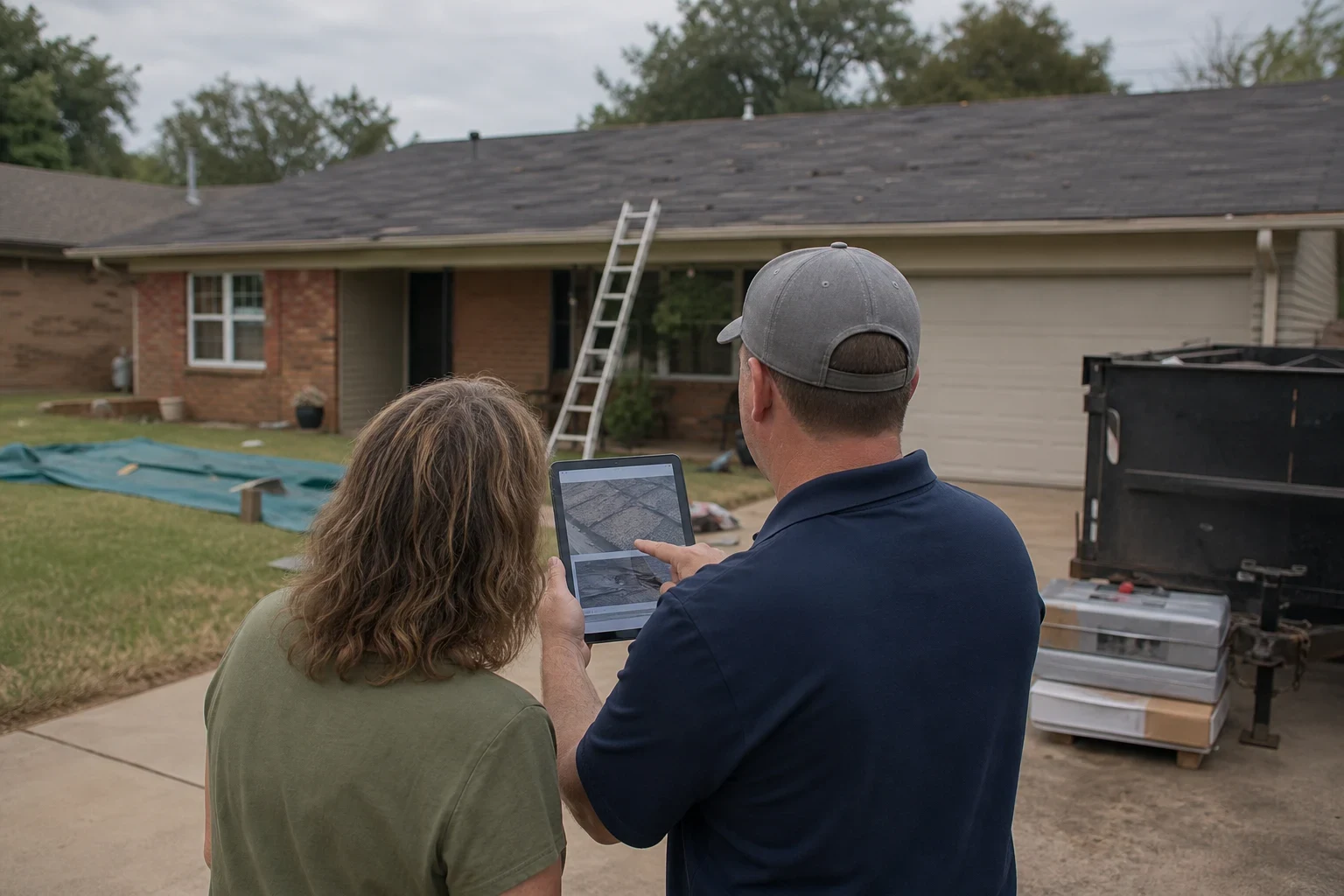
Our inspector goes over every slope, checks flashing, pipe boots and vents, then climbs into the attic to read the underside of the decking. Each finding gets a photo. The person who books your visit is the one who explains the results, so your questions go to someone who saw the roof.
Why a Roof Inspection Is Worth Doing
Leaks rarely begin where you first notice them. A neoprene pipe boot splits in the sun, a nail works loose and lifts the shingle above it, or step flashing separates from a sidewall. Water can soak the plywood decking for months before any stain appears inside. Finding those points early keeps the fix small and the cost down.
Book one after hail or high wind, before you buy or sell a house, once a roof reaches roughly 15 years old, or when a stain shows up and its source is unclear. It also settles a simpler question: how much life your current shingles have left.
One person handles your inspection from the first call onward. They set the time, check the roof, review the photos with you, and remain your contact if you move on to roof repair or roof replacement.
What We Check on Your Roof
- 01
Shingle surface and seal
Bare spots where granules are gone and the fiberglass mat shows, cracked or creased tabs, and seal strips that no longer hold all go on the list. Once a shingle loses its bond, wind flexes it until it tears along the nails.
- 02
Flashing and penetrations
We examine chimney counterflashing, step flashing along walls, valley metal, kickout flashing and each pipe boot. Far more leaks come from these joints than from the flat field of shingles.
- 03
Hail and wind marks
Hail can fracture the mat beneath the granules and leave a soft bruise you can feel by hand. We also look for dents in vents, drip edge and gutters, and chalk each hit so the photos read clearly.
- 04
Attic and decking
Up in the attic, the plywood shows stains, dark or separating layers, pinholes of daylight around nails and damp insulation. Leaks usually mark the decking well before they reach your ceiling.
- 05
Ventilation
We weigh soffit intake against ridge or box vent exhaust. When air cannot move, summer heat cooks shingles from underneath and winter moisture condenses on the decking.
- 06
Gutters and drainage
Gutters that clog or sag push water back under the drip edge and rot the fascia board. We note any cleaning, re-pitching or replacement needed, and our gutters page explains that work.
Questions about Roof Inspections?
Call(405) 730-0918Signs Your Roof Is Due for an Inspection
Granules in the gutters
Some loose granules are expected in the first months on a new roof. Heavy buildup on an older roof says the asphalt is drying and the shingles are thinning.
A recent hail or wind storm
Oklahoma spring hail often leaves damage you cannot spot from the yard, and insurers usually set a window for filing. An inspection with dated photos soon after the storm puts the facts on record.
Ceiling or wall stains
A tan ring or blistered paint means water has already soaked the drywall. Because water runs along rafters and decking, the actual entry point is often a few feet upslope.
Missing or curling shingles
Cupped tabs, lifted edges or bare patches give wind a grip on the course above, and each gust loosens a few more.
Buying or selling a house
Buyers and lenders want to know the roof's condition early. A documented report answers that up front and helps keep the closing on schedule.
How Your Inspection Day Goes
- 1
You make one call
You tell us what prompted the inspection, how old the roof is and whether you have attic access. That person becomes your contact for the rest of the job.
- 2
Exterior and roof walk
On a walkable pitch we go up and check each slope, every penetration and all the flashing. On steep or fragile roofs we use the safest approach for that roof and avoid walking where it would cause damage.
- 3
Attic check
If you are home, we go into the attic to look at decking, ventilation and insulation. It usually takes a few minutes and we keep the hallway or closet clean.
- 4
Photos and a plain answer
We show you dated photos of each finding and tell you what is urgent, what can wait, and what is fine. If nothing needs work, we say so.
- 5
Next steps, if any
If you want repairs, a written line-item estimate follows. For storm damage we explain how the insurance process usually runs, while your adjuster makes the coverage decision.
What Affects the Cost of an Inspection
An inspection is priced by how much roof there is to check and how hard it is to reach. The scope you need also matters, since a quick condition check differs from detailed storm documentation. We talk through the scope on the phone so you know what you are getting before we arrive.
- Size and pitch
- More squares and more slopes take longer to cover. Steep pitches need extra safety setup and slow the work down.
- Stories and access
- A two-story roof or one surrounded by trees and fences takes more time to reach safely than a single-story ranch.
- Roof material
- Asphalt shingles are the most direct to inspect. Tile, metal and wood shakes each need their own methods to avoid breaking or denting anything.
- Report detail
- A sale or insurance claim usually calls for a fuller photo set with measurements, which takes more time than a routine checkup.
Roof Inspection Questions
How long does a roof inspection take?
A typical single-family roof, attic included, takes around an hour. Bigger, steeper or storm-hit roofs run longer because there are more findings to photograph. You get a time estimate on the phone before we come out.
Do I need to be home?
The exterior check does not require you. The attic does, and the underside of the decking often tells us more than the shingles. Plenty of homeowners stay so they can go through the photos with us when we finish.
How often should my roof be inspected?
Plan on a check every one to two years, and add one after any serious hail or wind. Spring storms batter shingles, and winter freeze-thaw cycles work flashing and seal strips loose. Looking after a hard season finds those problems while they are small.
Will an inspection help with an insurance claim?
Yes, as evidence. Dated photos of hail bruises, lifted shingles and dented vents or gutters show your insurer what happened. We walk you through what we documented and how claims typically proceed, and your adjuster makes the coverage call.
What if you find a problem?
You see the photo, hear what caused it and learn whether it needs roof repair or a larger fix. A written estimate follows, and the same person schedules the work if you decide to proceed. Nobody asks you to commit on the spot.
Know What Shape Your Roof Is In
One phone call sets up the inspection, and the person you speak with stays with you through the photos and any work that follows. You will have a clear picture of your roof and a straight answer on what it needs.